Showing posts with label birding sweet springs. Show all posts

Saturday, October 2, 2021

Fall Birding - A Little Here and a Little There

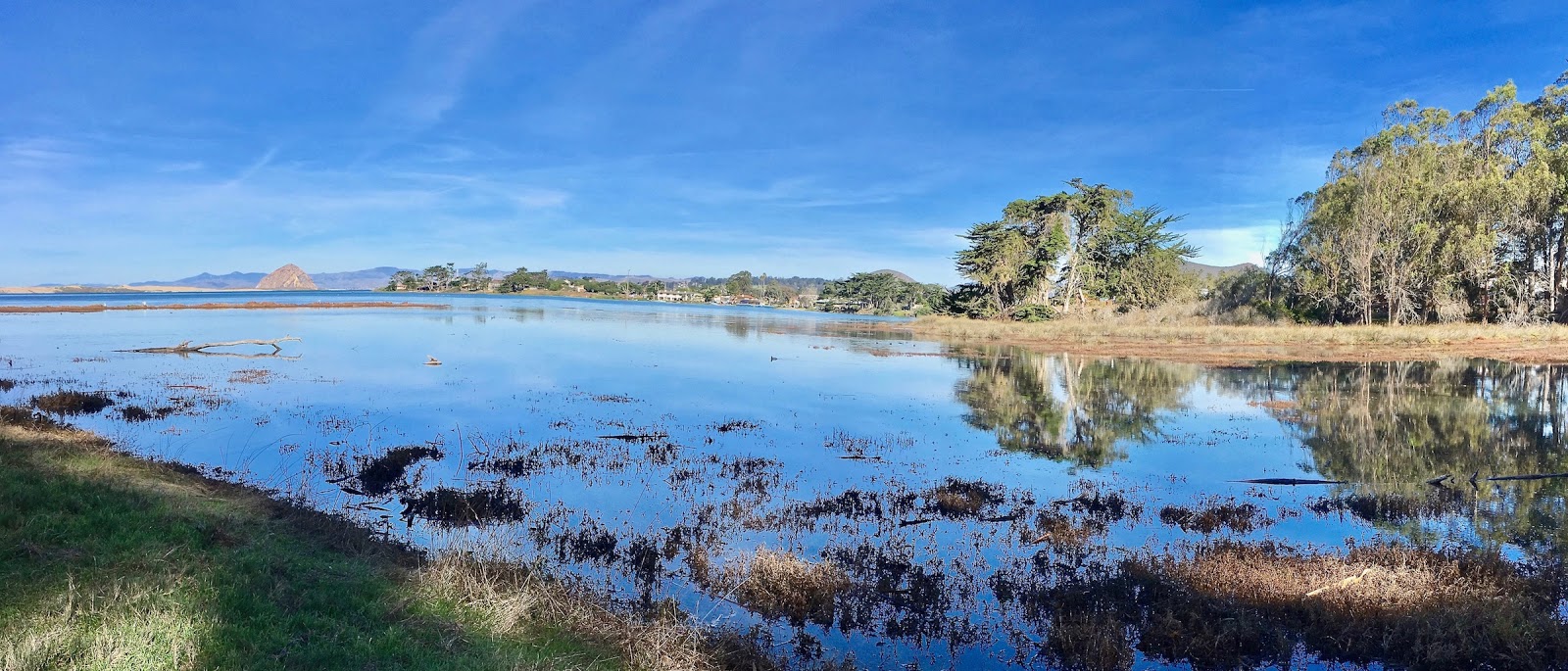
Sweet Sweet Springs - The tide was high and the fog was meditating on its power to grant the people of peaceful Baywood the unique privilege of experiencing the sun's warmth.  

Nuttall's Woodpecker was active in a tall Cypress; Chickadees, Oak Titmouse were flitting through a stand of low growing oak.  In the pond numerous Mallards slept, preened and chatted about their recent travels; Song Sparrow darted through pond-side vegetation, and a great and Snowy Egret, perched high in a tall Eucalyptus, watched the action.
A noisy Belted Kingfisher (photo by Gary O'Neill) searched for lunch.
In a Channel, carved by time and tides, 26 Blue-winged Teal fed.  I consider them the "Early Birds," as every year they are the first small migratory duck to arrive in Sweet Springs.
Estero Bluffs State Park - Vila Creek - Blooming along the path to the beach and pond was Tar Weed and Mock Heather.  My friend Phoebe and I were hoping to see a migrant species that is seen only occasionally on the Central Coast, a Black-necked Stilt.  It would be a first sighting for Phoebe.

A few migratory shorebirds, Western Sandpiper, Godwit, Whimbrel and a few Long-billed Curlew were feeding along the edge of the beach.  Higher up the beach, Killdeer, a pair of Pectoral Sandpiper and four Turkey Vultures.  Numerous Snowy Plover were busy chasing kelp flies.  In the background of the top image in the collage, symbolic fencing can be seen.  The fencing, along with signage, encourages people to respect the Snowy Plover nesting grounds.   https://www.mbnep.org/2016/03/04/symbolic-fencing-helps-morro-bays-snowy-plovers/ 
We finally reached the pond where there had been several recent sightings of a juvenile Black-necked Stilt.  At the bend in the creek perched a Great Egret; a few feet out from the Egret was a pair of Mallards.  A few feet from the Mallards strode a black and white, pink legged Black-necked Stilt.  They can swim and dive but prefer to wade in shallow water.
The photo was taken by local birder/photographer Maggie Smith about two hours before we arrived at Villa Creek pond.  


Tuesday, January 19, 2021

Birding Sweet Springs and . . .

Sweet Springs yesterday morning - Weather warm, no wind, and absolutely beautiful.  Silently floating on the peaceful bay were large flocks of Scaup, Bufflehead, and Ruddy Duck.  Below is a female Ruddy Duck.  
 I find it amazing that the adorable little Ruddy Duck nests in nest holes excavated by Northern Flickers. 

In the distance could be heard the cheerful chatter of Brant Goose.  
Perched along the edge of the channels was a pair of Northern Pintail, one lonely Cinnamon Teal, two American Widgeon, Blue-winged Teal, and the smallest of the dabbling ducks, Green-winged Teal. 
Mallards rested along the banks of the pond.  
It was a good day for seeing Passerines (perching birds).  I think the Quail may have been warming up for spring, as there was persistent calling.  Due to the abundance of native shrubs, Quail are numerous and if not seen can always be heard.  Feeding on the ground were White-crowned and Golden-crowned Sparrow, Song Sparrow, Oregon Junco, and House Finch.  In the shrubbery were several Ruby-crowned Kinglet, Spotted Towhee, and a Blue-grey Gnatcatcher.  In the trees, Chestnut-backed Chickadee and the most precious bird of all, Bushtits.  Common Yellow-throat (below) was flitting along the edge of the pond.  
Now for Estero Bluffs - Lately I have been going at least once a week to the Bluffs.  Although I am focused on the rocks, there are always birds to be seen.
About half way up this multi million year old formation, Black Turnstone have found a safe haven.  The lower section of the rock is Greenstone, on the top weathered Sandstone, and possibly a little Shale on the lower right.  

Brown Pelican, Brandt and Pelagic Cormorant are packed like sardines on a huge rock formation located about 100 yards off-shore.  The composition of the rock is more than likely, Pillow Basalt (hardened lava  formed in the deep sea).  Stay tuned for more geology and birding.  And if humanly possible keep a positive attitude.


Friday, August 14, 2020

Sweet Springs Easy Birding plus Oystercatcher Monitoring Update

Sweet Springs Preserve - 9:00 to 10:00 - Heavy moist overcast.  Some people might consider a grey morning rather unpleasant and dull.  For me it was an ideal morning to bird Sweet Springs.  The bay was serene in its stillness.
Shorebirds were racing back and forth across the narrow strip of muddy sand.  Semipalmated Plover were numerous.  These tiny migrant Plovers may have just arrived from their breeding grounds in Alaska.

There were a few Least Sandpiper.  They really are tiny.  Two Greater Yellowleg were focused on probing the sand, while two handsome Black-bellied Plover, in fading breeding plumage, were strolling sedately along the edge of the bay.  I must not forget the Willet, the Marbled Godwit, and dear, faithful Black Phoebe.  A Green Heron flying into the pond area was the highlight of the morning.

      Oystercatcher Monitoring Update
July 29, 2020 - Last photo of the family.  Chicks were nearly a month old.
The last few days of monitoring - July 3 -Parents on duty, one chick visible.  I briefly saw the entire chick moments before taking the photo.
July 7 - Parents on duty, chicks absent.  They could not fly and they could not have wandered far as their rock formation was separate from the other formations.  July 10 - Parents on duty, chicks absent.  One parent flew off, returning with a food morsel clutched in her bill.  She walked down the rock face disappearing into the cracks, sadly emerging with the morsel still clutched in her bill.  I knew in my heart she was searching for her chicks.
What had taken the Oystercatcher chicks?  Was it a raptor?  Was it the sea?  In my estimation, the unforgiving sea had taken the chicks.  Between July 1 and July 6, extremely high tides, combined with a powerful storm surge, had swept them off the rocks.

I have not given up hope.  During the winter months Oystercatchers are often seen feeding along the edge of the surf in Corallina Cove, and I will be there looking for a juvenile with its two-toned bill.


Thursday, January 17, 2019

Birding Between Rain Storms


 Laguna Lake - The rain had just stopped and I was headed to Laguna Lake.  I believe I was the only birder in the county that had not seen the Vermilion Flycatcher.  It’s not that I hadn’t tried.  Upon arrival at the small fishing dock, actually the area where the little darling has frequently been seen,  I heard a sweet, yet unfamiliar song.  On are twig, at the top of a scraggly willow, perched the Vermilion Flycatcher. ( Photo of the Laguna Lake Flycatcher by Roger Zachary.)
This little traveler is considered a rare visitor to the Central Coast.  He may have journeyed here from East Texas or from suitable regions in the Eastern Ca. deserts such as Zzyzx, near Baker Ca. or the Big Morongo Preserve, east of Palm Springs, Ca. where the Vermilion Flycatcher has been known to nest.

Turri Road - The weather was blustery.  In recently plowed fields were large flocks of Red-winged Blackbirds.  Perched on fencing were Say’s Phoebe, Western Bluebird, and Lark Sparrow (below).
 Morro Bay Marina - Looks like the storm has passed - Seven species of underwater foragers, Bufflehead, Ruddy Duck, Common Loon, Western Grebe, Eared Grebe, Pied-billed Grebe, Double-creasted Cormorant, and a cooperative male Belted Kingfisher (below).  I love birding the Marina as the water birds are in a confined space and much easier to identify.
Sweet Springs -  Two Ruby-crowned Kinglet and a Blue-grey Gnatcatcher frolicked in Silver Lupine bushes growing along the path to the east overlook.  Kinglet and Gnatcatcher can be difficult to observe as they are usually flitting thru dense foliage. 
In the shallower water, Cinnamon Teal, Blue-winged Teal (above), Green-winged Teal, and American Wigeon.  In the deeper water many hundreds of water birds.  Regardless of the weather birding the Central Coast is always a memorable experience.

My favorite photo of the day, California Towhee bathing.


Saturday, February 3, 2018

Where are the Dabbling Ducks?

Thursday morning at 10:00 the tide was very high (6.5).  At the Sweet Springs Preserve the extreme tide covered nearly all the pickleweed, filled in the channels and the ponds, with the exception of the tiny wetland where the springs bubbles forth. 
Usually coming into Sweet Spring on the incoming tide, dabbling ducks such as Northern Pintail, Northern Shoveler, American Wigeon, Green and Blue-winged Teal (above) and Cinnamon Teal adapt their dabbling to finding tasty morsels in the flooded pickleweed.
For comparison, the above photo shows the flooded pickleweed at an average tide.” 

As I entered the preserve two female deer were feeding in the new grass growing along the edge of the boardwalk.  Both of the deer alerted to my presence.  In a few moments they disappeared into the brush. 
Coots were feeding in the grass.  I guess they wanted a change from the Sea Pines Golf Course where they usually hang out.  What I did not see were dabbling ducks.
Searching the pond I noticed a mixed flock of about 20 Teal, sound asleep on the edges of the wetland.  Perhaps they were exhausted from their flight to Morro Bay.  Usually ducks notice a close human presence.  These little darling did not even blink.

Scanning the far side of the flooded pickleweed I spotted a few more Teal,  but where was the bounty of dabblers I had been expecting?  For several years I've noticed that fewer water fowl are wintering in Morro Bay.

From the photo, taken at Sweet Springs in January 2007, there is no doubt in my mind that fewer ducks are wintering in Morro Bay.     Can you find the Eurasian Wigeon?
  I am hoping that the missing dabblers are busy feeding in another area of the bay.

Tuesday, May 30, 2017

Sweet Sweet Springs


The welcoming committee this beautiful morning was a California Quail family, mom, dad and four tiny fledglings resembling walnuts with itty bitty legs.  Bird song filled the air.  I had Sweet Springs to myself.

Nuttall's Woodpecker, singing it's flight song, dashed between the trees.  Two Tree Swallow sped overhead in their relentless pursuit of insects.  House Sparrow brightened the semi-sunny morning with it’s cheerful chatter.
High in the canopy, Black-headed Grosbeak sang its little heart out; on the far side of the preserve an answering song could be heard.  (Unfortunately, too breezy to record the song.)
Dark-eyed Junco scratched in the leaf litter.  Four Mallards fed in a channel; I doubt they noticed the melodious song of the Black-headed Grosbeak.  Faithful Black Phoebe was flycatching from her usual perch on a fallen eucalyptus tree. (the channels empty when tides are low)
I experienced birding nirvana for about a half hour in Sweet Springs this morning.  Before I departed for home, I gently educated a pair of gentleman from Mohave who were convinced the Mallards were Northern Shovelers.

Thursday, December 15, 2016

Birding the Last King Tides of the Year


                             Sweet Springs Wetlands
King Tides occur when the Earth, Moon and Sun are aligned at perigee (when the moon is nearest the earth) and perihelion (when the earth is closest to the sun), resulting in the largest tidal range seen over the course of a year. In other words King Tides occur when the Earth is closest to the Sun.  * 1 (see end of blog for more on tides)

Yesterday's morning tide was 6.8, the highest of the year.  I arrived at Sweet Springs at 9:45.  The tide was moving into the ponds.  From the small bridge I watched the water slowly cease its forward movement. For several minutes it was still, as if it were resting. Slowly the water began its journey back to the sea.  Within an hour the tide will be moving swiftly.  The higher the tide, the swifter the tide moves out of the bay. I have watched kayakers trying to paddle against the tide.  With great effort they make no progress.
     Two male Blue-winged Teal, one female Mallard
Blue-winged Teal and Mallards were the only ducks feeding in the flooded pickleweed.  There was a Song Sparrow singing which was delightful.  Watched a deer grazing on the far side of the wetlands.  Out from the overlook was a huge flock of resting winter ducks, primarily Ruddy Duck and Greater Scaup with a few Western Grebe on the periphery.  The below photo only shows a small section of the ducks.  Can you find the a Western Grebe?
 I could not linger at Sweet Springs, as I wanted to get to the Morro Bay Marina to get a photo of the  Winter plumage Red-throated Loon that had come in on the tide the day before. Seeing the Red-throated Loon, who may have just flown in from its Arctic breeding grounds, was quite exciting as I have seldom seen one and only at a distance.  (below photo by Roger Zachery.  I did get a photo, but Roger's photo was better than mine.)
 My faithful friend, the Spotted Sandpiper who usually probes in the wet sand along the edge of the marina was sitting on a post.  There were several Pied-billed Grebe,  two Common Loon, a pair of Red-breasted Merganser, and a Partridge in a pear tree.  In the below photo can you find the Red-throated Loon.  It does show, if you squint when you look at the expanded image.
The diving ducks, Brant Goose, and the Avocet were further out.  Most of the shore birds were clustered on patches of pickleweed waiting for the tide to go out.   My last bird of the morning was an Orange-crowned Warbler flitting through the brush. 

The Christmas Bird Count is Saturday, the 17th.   I will be counting yard birds.  Last year I had 23 species.   I have high hopes the local Bald Eagle will fly over.  That would be a real feather in my Bird Count Cap.


1. Tides are the rise and fall of sea levels caused by the combined effects of the gravitational forces exerted by the Moon and the Sun combined with the rotation of the Earth.

                                   Merry Holidays

Sunday, October 16, 2016

Birding Near - Birding Afar


        Sweet Springs Pickleweed at Low Tide 
Birding Near - Sweet Springs, a beautiful misty morning with an incoming tide.  The only sounds were those of the birds.  High in a tree came the penetrating sound of a Northern Flicker - music to my ears.
In the flooded Pickleweed 10 newly arrived Blue-winged Teal fed; with endless patience a Great Egret sought its prey.  (below photo)
 Along the edge of the bay Great Blue Heron and Snowy Egret.  Four Greater Yellowleg arrived, calling as they come in for a landing; Black Phoebe flycatched from a partly submerged snag.

In the reeds, Common Yellowthroat and Song Sparrow.  From a Eucalyptus on the edge of the water came the grating call of a Belted Kingfisher.   My euphoria was interrupted as an Osprey silently passed by - always a pleasure seeing this powerful raptor.  (photo by Jerry Kirkhart)  
Birding Afar - Mono Lake - Located on the Eastern side of California's Sierra Nevada mountain range, depending on road conditions 5 to 6 hours from the Central Coast. 
Mono Lake is a vital stop on the Pacific Flyway.  There is a possibility that some of the migratory birds that arrive in Morro Bay have stopped at Mono Lake to rest, molt and feast on the abundant alkali flies and brine shrimp that inhabit the lake. 
On the lake were thousands of Eared Grebes in winter plumage (above) and thousands of Ruddy Ducks.  Eared Grebe arrive at Mono Lake in greater numbers than any other species. Surveys have shown that there are nearly a million Grebe on the lake in the fall; they may double or triple their weight as they feast on the brine shrimp.  Some get too fat to fly and must lose weight before departing for their winter destination.  It is difficult to imagine an overweight Eared Grebe.