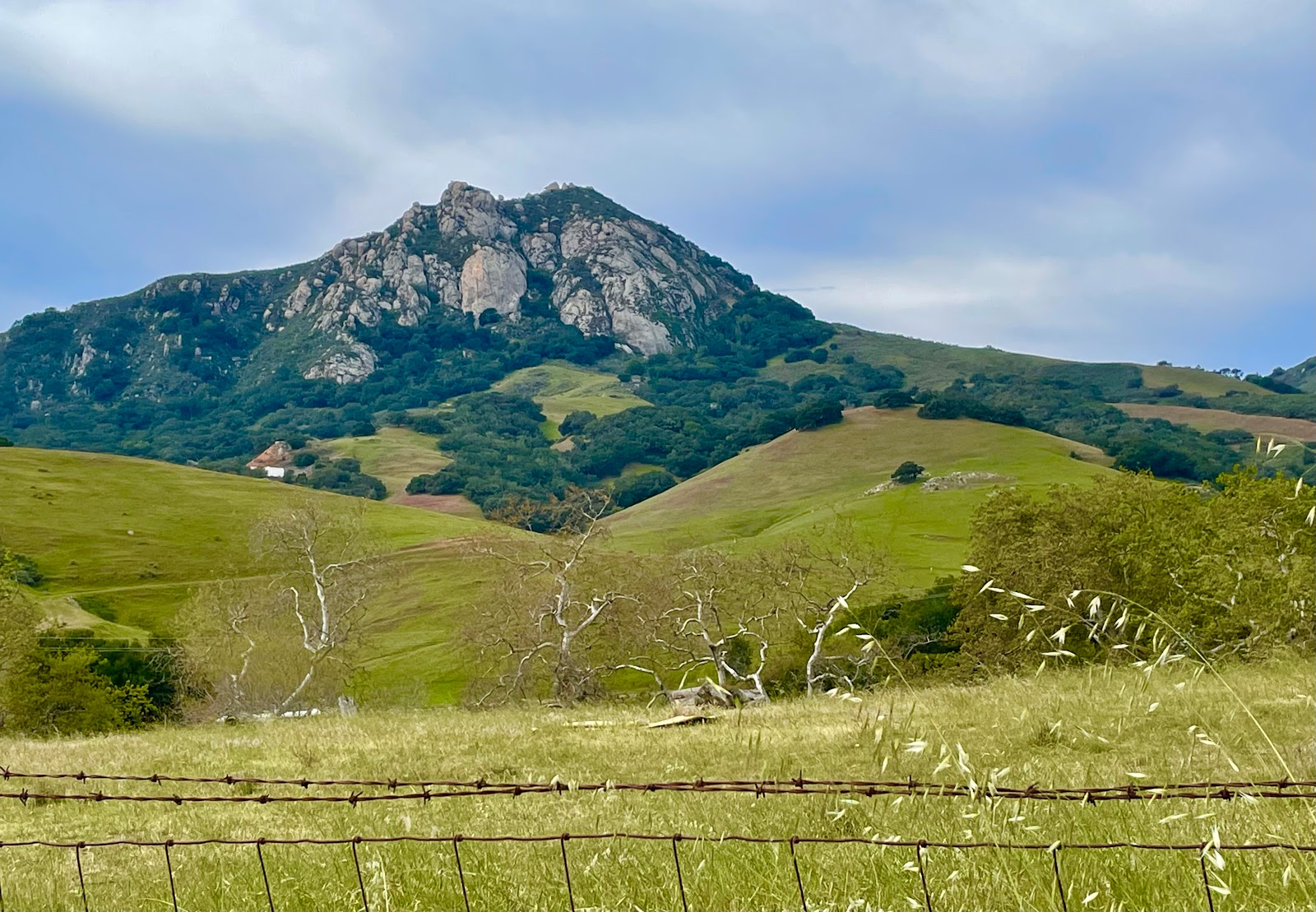
Turri Road - A few minutes from San Luis Obispo, a few miles west on Los Osos Valley Road, a right turn onto a quiet rural road and you have arrived. Spring green is the color of the day. Brilliant patches of Buttercups, Lupine, and Poppies add color to the scene.

Four Western Bluebird nest boxes were placed along the fencing. Sallying fort from perches on the barbed wire fence was a pair of Bluebirds. Hopefully they will soon be parents.

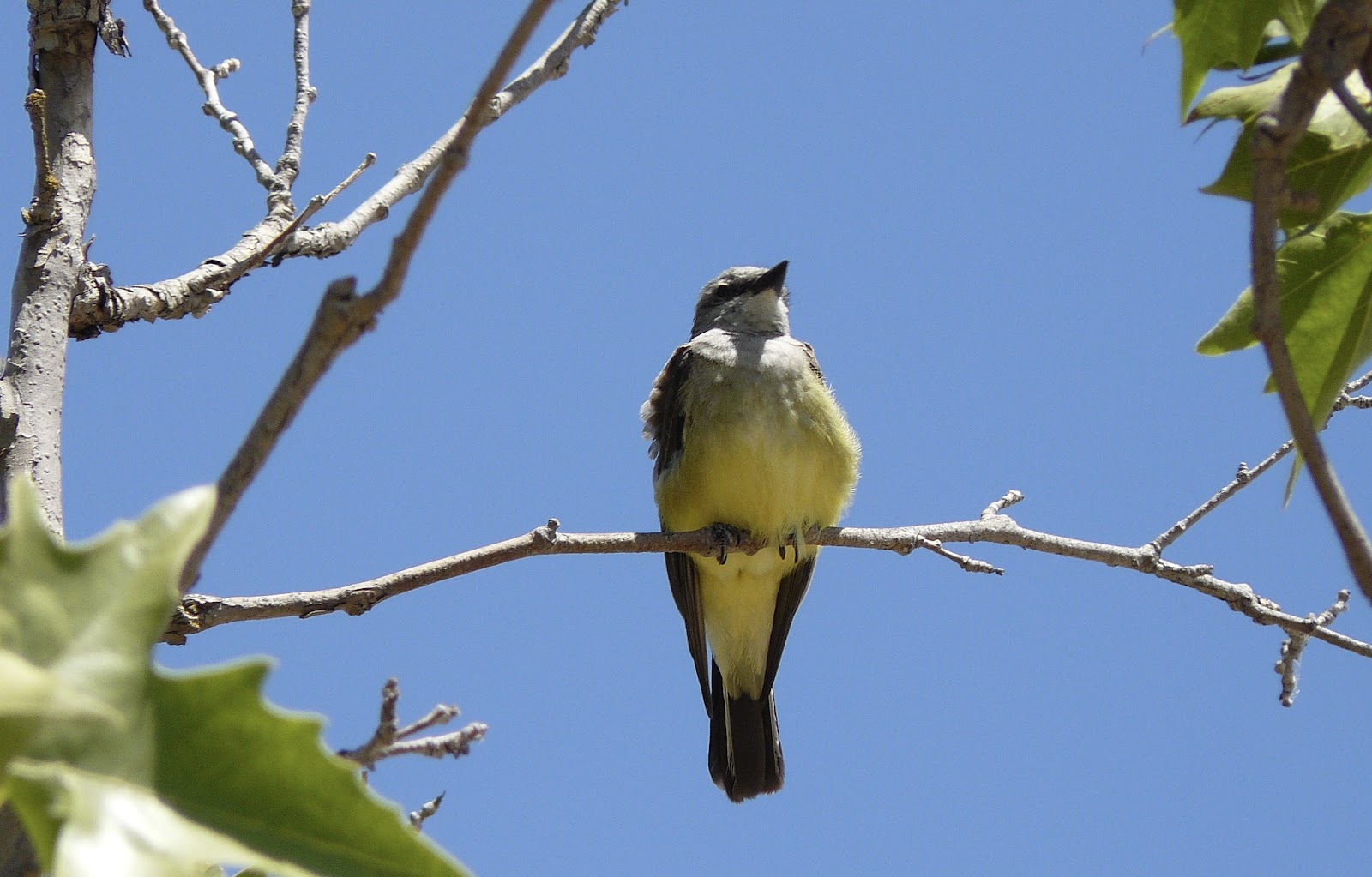
As I tootled up the road more Bluebirds and a pair of Cassin's Kingbird.

Western Bluebirds are indigenous to the area and may be seen year round. Don't forget to look up as they often perch on utility lines.

Finally made it to the top of the hill. Two male Meadowlarks, attempting to attract a female were singing, flicking their tails, and pointing their bill up. They carried on for several minutes, sadly to no avail. The female silently disappeared into the grass.

I was admiring the view when I noticed a small bird perched on a well weathered post - A Lark Sparrow, one of my seldom seen favorites. Unlike many song birds, they walk on the ground rather than hop.

Next stop, " the ponds."

To my delight there was a variety of birds, eight Greater Yellowlegs, one Green-winged Teal, a pair of Northern Shoveler, six Mallards, a Great Egret, a small flock of sandpipers, and a Cinnamon Teal resting on a clump of pickleweed. With the exception of the Teal, they were all voraciously feeding. (photo was taken a few days ago when there were no birds) Many migratory birds use Morro Bay and its adjoining wetlands as a place to rest and refuel.