Showing posts with label Wilson's Snipe. Show all posts

Wednesday, March 16, 2022

Birding Cal Poly

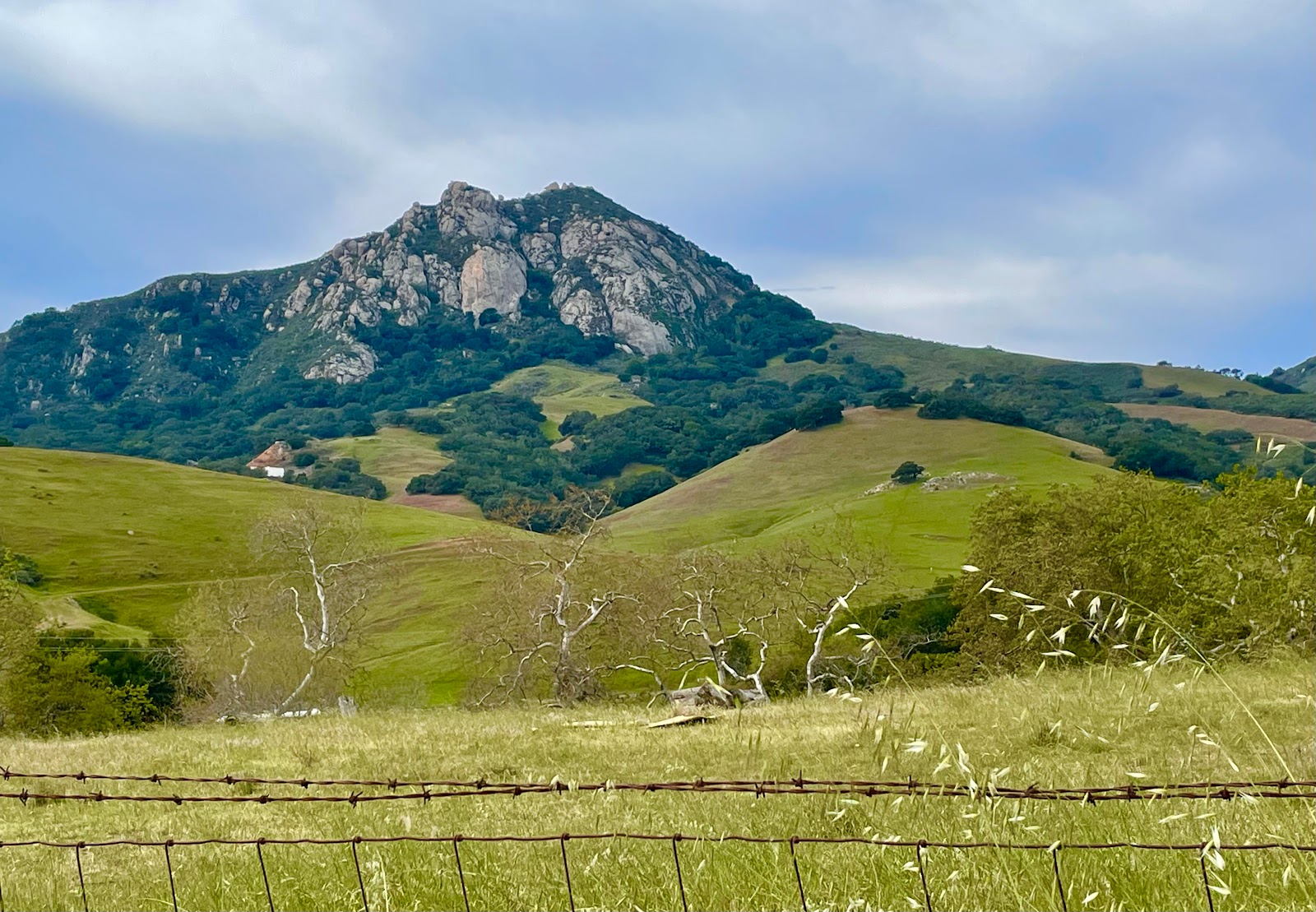
Stenner Creek Road passes through the Cal Poly University outback- First sighting, Bishop Peak.  Elevation 1546 feet; it is the highest in a chain of volcanic remnants known as the "Nine Sisters.

Next sighting, a Black Angus bull - a double take kind of experience, as I had never seen an Angus Bull close enough to touch.  It was enormous!  Cal Poly is known for its extensive beef cattle program. 

Back to birding - A few yards from the cattle pens was a pond with four Northern Shoveler; three male and one female actively feeding. 

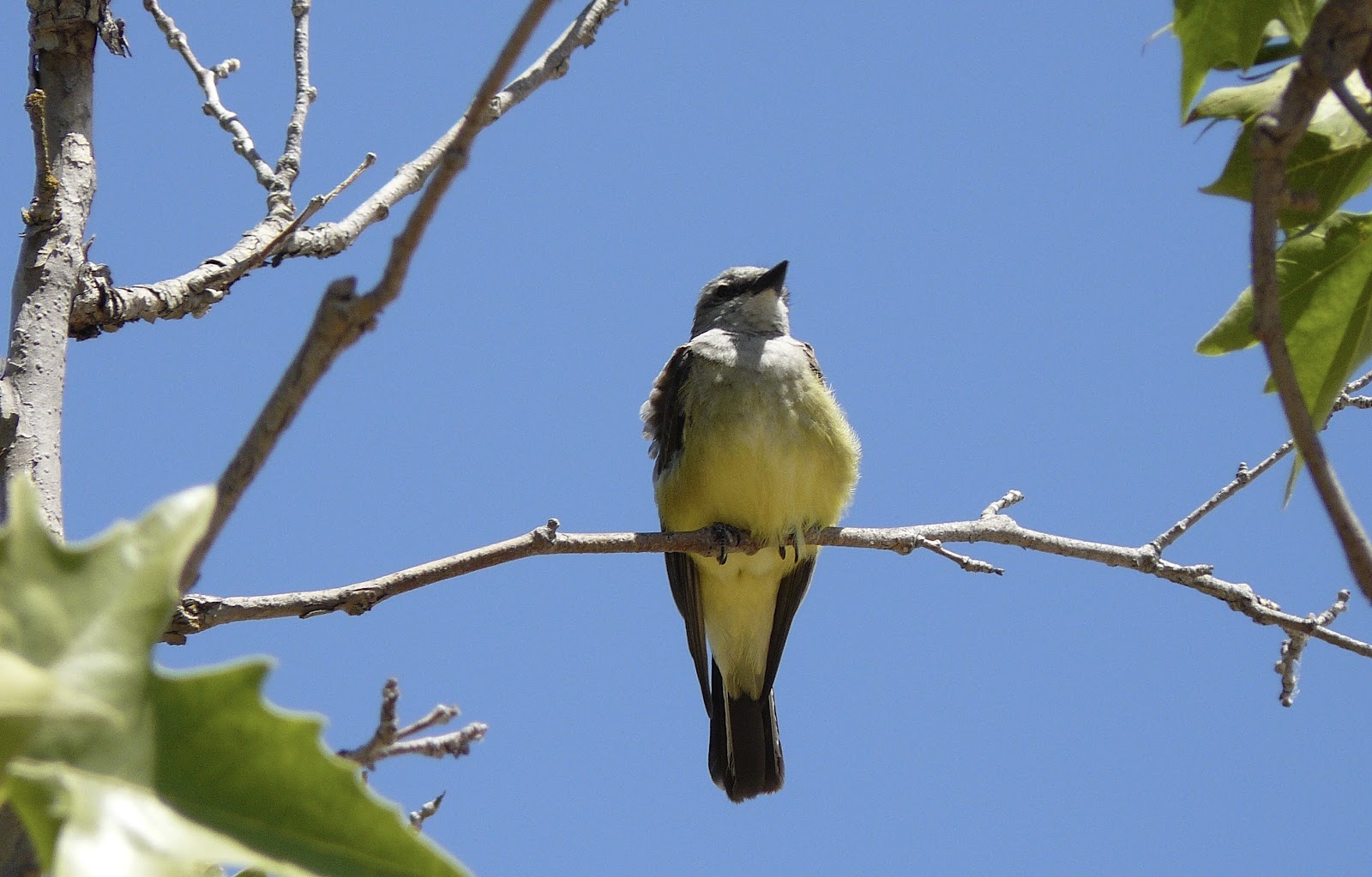
 Across the road White-crowned Sparrow, Western Bluebird; Cassin's Kingbird sallied out from it's perch to take insects in midair (photo by Mike Baird).  Brewer's Blackbirds in the thousands around the cattle pens.  Overhead a Red-tailed Hawk soared with Turkey Vultures.  It had been awhile since I had been out and about - every sighting was a joy to behold. 

After passing through an extensive grove of mature avocado trees I came to Stenner Creek.  Sycamore, Arroyo Willow, and Live Oak were the primary trees along and in the creek.  The scrub brush was dry and dense. 
 
80 feet overhead was an impressive, heavily rusted 129 year old train trestle with a span of 950 feet.  Freight and passenger trains cross this elderly trestle on a daily basis.  
For additional details on Stenner Creek Trestle
 http://mycoastalcalifornia.blogspot.com/2014/09/stenner-creek-bridge-snippet-of-coastal.html

Dominating the birding scene was a pair of vocal Red-shouldered Hawk actively nest building in a tall Sycamore.  Only one Hawk was doing the work, going back and forth.  The mate was perched on a nearby post supervising.  I believe they were refurbishing a prior year's nest. (photo by Mike Baird)
Birds around the creek - Nuttall's Woodpecker, Lesser Goldfinch, Spotted Towhee, Calif. Towhee, Bewick's Wren, Oak Titmouse, Calif Scrub Jay, Black Phoebe.  Birds heard but not seen - Calif Quail, Northern Flicker.

I had been hoping to have an unusual sighting, but so far just the usuals.  I pushed on, past the peaceful bulls, into the maze of the Cal Poly campus on an attempt to locate the "swine pond" where a Common Moorhen had been seen.  A Moorhen is a member of the Rail family and resembles a Coot.  Lacking success at locating the swine pond, I decided to look more thoroughly at a pond I had just passed.  The pond was sorry looking, lacking vegetation, not even a weed.  Although the pond was not a pleasant sight, I had an unexpected, delightful sighting.  At the edge of the water, standing among a pile of cow pies was a seldom seen, Wilson's Snipe.  Yeah!  A great way to end the day.  Wilson's Snipe is not the usual shorebird.   Check out Cornell Lab's Overview.   Wilson's Snipe Overview, All About Birds, Cornell Lab of Ornithology


Saturday, September 19, 2020

Birding on a Smoky Morning

Morro Creek, Morro Bay Ca. - To say the least, smoke was prevalent, birds were few.  I was wearing a mask and was determined to make the most of my time on the beach.
Morro Creek travels from the foothills to the Pacific Ocean.  Before it reaches the sea, the creek sometimes forms a lagoon.  Beach lagoons come and go depending on the time of year, the fresh water, high tides, and surf conditions. 

Greater Yellow-leg, Willet, and Snowy Egret were feeding in shallow water.  Nearby, a Semi-palmated Plover, two Killdeer, and my special friend, Black Phoebe.

Most amusing was watching the Snowy Egret foraging.  It swiftly darted back and forth, then 
suddenly stopped to jiggle one of its bright yellow feet under the water.
Would this creative behavior stir up an edible critter?  Yes!  What ever it was went down the Snowy's throat faster than I could blink.

A footbridge crosses the creek.  I had parked on the south side of the creek, as I crossed over the bridge, I saw only a few Mallards.  On the way back checked the creek again, noticed three Red-necked Phalarope in non-breeding plumage. (below)
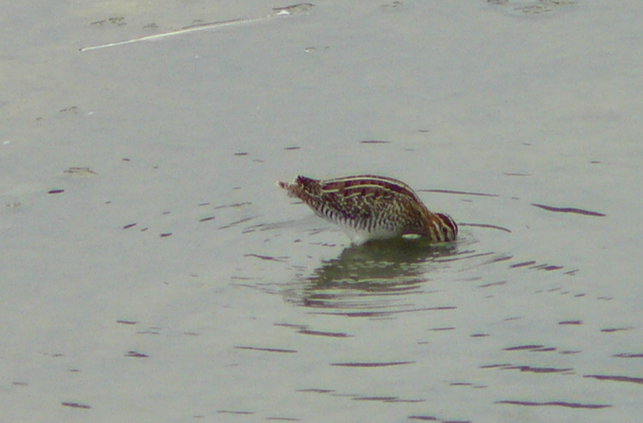
On the edge of the wet sand a small flock of Least Sandpiper, another handsome Killdeer, and a mystery bird.  I do love a mystery.  I was on the bridge looking down.  It was plump with white stripes on its head and back.  Its head was immersed in the water up to its tiny eye.  
Hoping to identify the bird, I took numerous photos.  Arriving home I searched through my "National Geographic Guide to Birds of No. America" and found Wilson's Snipe - described by the Guide as "stocky; with very long bill; boldly striped head, barred Flanks."  Ah, another mystery solved.
In the above photo, top image is the Snipe followed by two Phalarope.  The large image of Wilson's Snipe was borrowed from Wikipedia to get a good look at its long bill.  The tip of the Snipe's bill remains closed while it consumes invertebrates.  This useful feature allows the Snipe to consume food without lifting its head from the water.  

View of Morro Creek Lagoon from Google Earth.  Ephemeral beach lagoons are important habitats for migrating birds, particularly important now because so much habitat has been lost to fire.