Sunday, March 22, 2020

Are MdO Birds Practicing Social Distancing?

Much like humans the answer is yes, no, or sometimes.
Montaña de Oro (MdO)  -  Everything about MdO was Beautiful.  Coastal chaparral vibrant with spring growth, dramatic cloud formations, few people, precious bunnies dashing across the trail, and my favorite MdO bluff birds -  Scrub Jay (below), Quail, Thrasher, Wrentit, Bushtit, Bewick's Wren - Brandt's and Pelagic Cormorant - Oystercatcher, and the newly arrived Pigeon Guillemot.
But the beauty of the morning did little to assuage my deep concern over the welfare of MdO's birds.  Were they practicing "social distancing?"
"Yes!"  for Pigeon Guillemots.  Monogamous Guillemot pairs, obviously aware of the global pandemic, were keeping their distance from other pairs of Guillemots.  I was delighted to see they had perfected the art of social distancing.

"No!"  for the Brandt's Cormorant.  Like some humans Brandt's are very social.  They love to party.
"Sometimes!" for the Pelagic Cormorant.  When nesting they practice social distancing.  After their chick fledge they hang out in flocks, often mingling with other species of Cormorants.
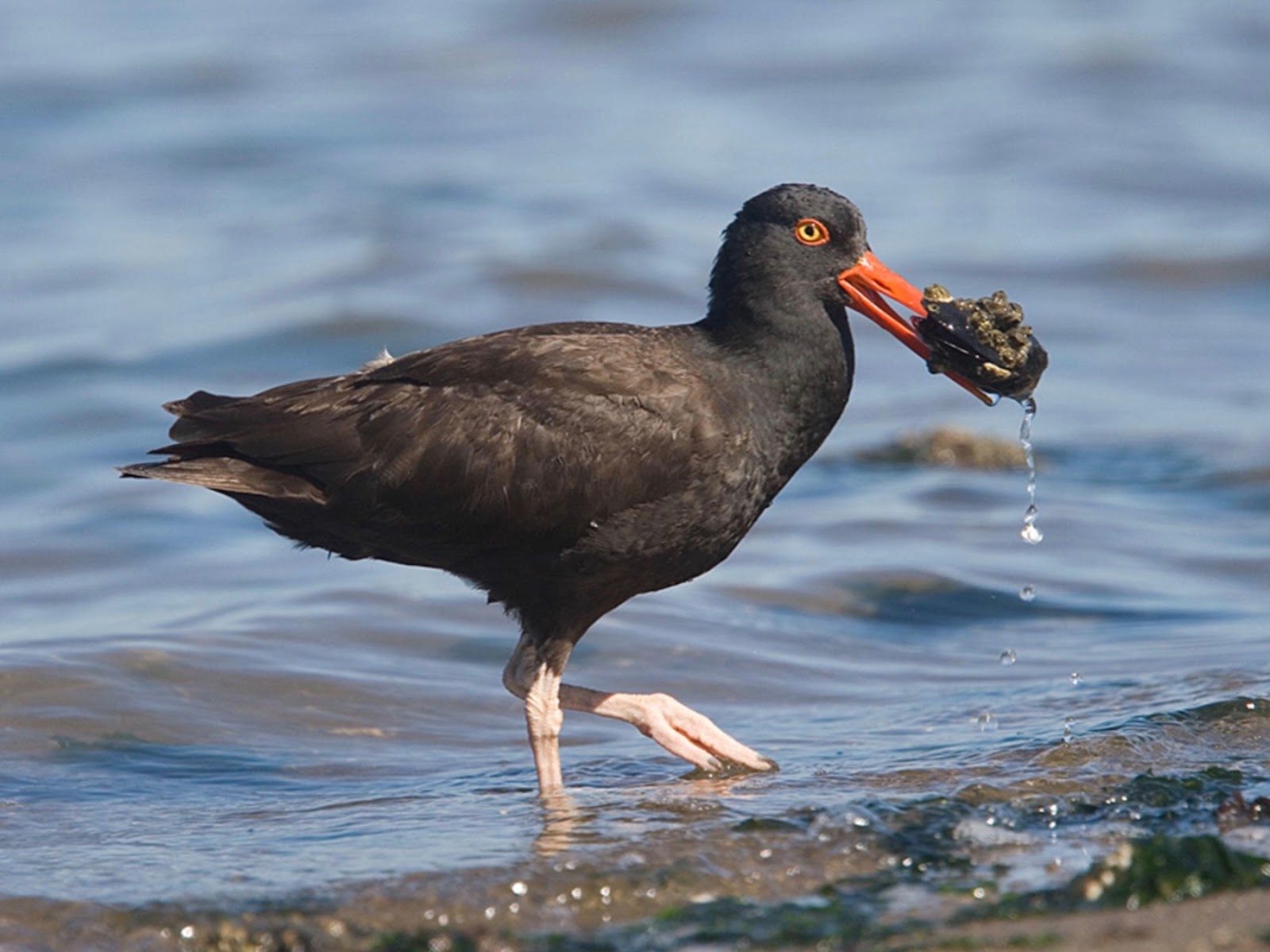
"Sometimes!" for Oystercatchers.  They nest individually, keeping all intruders at bay.  Though, in winter they often gather in flocks, sometimes with friends.  Oystercatchers do need to work on their social distancing skills.

"Yes!"  for the majority of bluff birds.  Social distancing is firmly fixed in their way of life.  After my morning observations I realized that regardless of what happens to the human population, the MdO birds will survive. 

Thought For the Day - "It is not the strongest of the species that survives, nor the most intelligent that survives.  It is the one that is most adaptable to change."     Charles  Darwin


Saturday, March 14, 2020

Birding Big Morongo Preserve


Big Morongo Canyon Preserve  - Morongo Valley Ca.  Audubon Society identifies it as one of the most important avian habitat areas in California.
I was birding with Cathy who has an in-depth knowledge of Big Morongo.  Our first sighting was a pair of soaring Cooper's Hawk.  Eventually one settled on the high point of a distant deciduous tree.  By carefully peering at the photo you may be able to see the Cooper's Hawk in the center.
Big Morongo offers six trails.  With an excellent chance of seeing a Long-eared Owl, we chose the Marsh Trail (below) that wends it's way along a stream and through a marshy area.  Stately Fremont Cottonwood, Red Willow, thorny Mesquite, and California Fan Palm with its dense skirt of fronds, provide a plethora of feeding and nesting opportunities for numerous species of birds.  A long-eared Owl would be a first sighting for both of us.
A few years ago fire burned 2,000 acres of the Big Morongo Preserve.  Last year's rain had been very helpful in the restoration of the wetlands.  Burned Willow and Cottonwood were showing signs of life.  Young Fan Palms were emerging from the wet marsh.

Thorny Mesquite, appearing singed and lifeless was sprouting new life on its blackened limbs.  The Mesquite's mistletoe had also come to life, as it had produced tiny red berries, a primary source of food for the Phainopepla.
In the preserve, the Phainopepla's diet consists primarily of mistletoe berries and insects - males are shiny black, females charcoal grey.  Both have red eyes and a handsome crest.  Their call is one plaintive note.  We had the good fortune of seeing several of these beauties. 
Phainopepla have a symbiotic relationship with desert mistletoe.  After eating berries the Phainopepla defecates.  The fertilized deposit, more than likely, landsingon a branch or twig, eventually growing into a clump of mistletoe, thereby guaranteeing a food supply and a cozy place to nest.
Male guarding his mistletoe.
The Long-eared Owl - Dan, the preserve's owl person had a nesting female Long-eared Owl in his scope.  She was looking directly at us.  She was a beauty!  Dan said the owl pair were not bothered by the people on the boardwalk.  Directly across from the nest was a bench.  Distance from bench to nest about 40 feet.  To say we had a memorable sighting is an understatement. 

Other birds along the Marsh Trail Boardwalk were Oak Titmouse, Ladder-backed Woodpecker, a mixed flock of Lesser Goldfinch, Bushtit, Ruby-crowned Kinglet.  In other areas of the preserve were Mourning Dove, Costa's Hummingbird, and a small flock of White-winged Dove. 
Our last sighting of the day was a special, seldom seen, Gray Catbird.  They are related to Mockingbirds and share similar vocal abilities.  Among their songs is a catty mew.  It had a black cap and under tail feathers were reddish.
Birding the Big Morongo Canyon Preserve was rewarding and fun.  I'm already looking forward to the next time. 


Wednesday, January 22, 2020

Birding Tuesday

Sweet Springs -  From the East Overlook - Green-winged Teal, Willet, Godwit, Ring-billed Gull, and a large brace of Ruddy Duck with a smattering of Bufflehead.  To the west a smaller brace of Scaup.  Whether they were Greater Scaup or Lesser Scaup, I was unable to determine.  I am working on my Scaup ID skills.
From left to right, Lesser Scaup and Greater Scaup (google photo)  The lesser has a narrower, purplish  head and smaller bill.  The Greater is 1.5 inches larger, has roundish, greenish head, and larger bill.  I am quite convinced some birds intentionally make identification difficult.
The Pond - Watched 20 Blue-winged Teal splash down in the pond. (above)  They immediately began a vigorous, high spirited bath that entailed much splashing and dunking.  Also in the pond, Green-winged Teal, one Pied-bill Grebe, and two pair of Pintail.
The brilliant white breast of the Pintail is most evident when they are resting along the edge of the pond.  Below a male Kingfisher let itself be known as it landed on a branch.  Their distinct call is described as a loud, dry rattle.
West Overlook - Feeding along the edge of the bay, Willet, Godwit, Western Sandpiper, Greater Yellowleg, Great Blue Heron, and two Black-bellied Plover.  Looking up is a must when you want to see a Bald Eagle or an Osprey in Sweet Springs.  Looking up this fine morning produced a magnificent Bald Eagle.  Yeah!
Montaña de Oro - Black Oystercatcher Update - The family of three continue together.  Seeing this precious family warms my heart.  The juvenile, the one with the two tone bill, is feeding in a splash zone.  Oystercatcher photos by Gary O'Neill.


Friday, January 3, 2020

Highlights of The Black Bloy Competition


January 3, 2020 - Montaña de Oro - The day was beautiful, sun warming, sea and sky a quiet azure.  Parking was not a problem as many of the Bloy (acronym for Black Oystercatcher) fans had either hiked, biked, or kayaked into the park.  For those who were unable to attend the events, a podcast will be available online.***

      Highlights of the Competition

Race to Hazard Reef - A paired race - From Islay Point (above photo) to Hazard Reef.  Each Bloy had to collect a food morsel, hold it securely in its bill and and fly back to the starting point.  Food morsels could not be eaten until after the morsels were weighed by the judges.  (many of the athletes could not resist eating their morsels)  The pair with the shortest flight time and the heaviest morsels won the event.  Briana and Bruce Bloy from Rug Rock were the proud winners.  As you can see in the photos they have a close relationship.

Pebble Toss - A precision sport - A pebble is tossed into a slight depression similar to the size of a Bloy nest.  The toss is judged on distance and how close the pebble comes to the center of the depression.  Too strong a toss could cause the pebble to bounce out.  Brandy Bloy from Point Buchon had been practicing her toss all year.  Brandy has a loyal following, as she is an environmental activist on climate change.  If it wasn't for the waves pounding against the rocks, you could have heard a pin drop when she executed her winning, no bounce toss of 12.38 feet.  Although shy, she posed for photographers.

Feeding Pose - Considered a difficult event - Participants had to hold a pose for a considerable period of time.  Since none of the entrants lasted more than three minutes, not much was expected of the last performer.  Brayden (below) the teenage son of Briana and Bruce Bloy astounded the crowd with a time of 9.35 minutes.  Brayden said he owed his success to his parents love and support.

Mussel Relay Race - A timed event - 5 teams of 5 were up for the challenge.  Team members were stationed about every half mile between Islay Point and Coon Creek.  The team member at Islay point began the race by collecting a mussel and flying it to team mate #2.  When the mussel finally reached team mate #6 at Coon Creek the mussel had to be relayed back to #1 at Islay Point.  If the mussel was dropped, the team member had to find a replacement.  The event was chaotic as all 5 teams were racing at the same time.
Team captain Bridget and her mates (below photo) won first place as they were the only team to complete the race with their original bivalve and all their original team mates.  Each Member of the winning team received a portion of the mussel's tasty adductor muscle.  In the above photo Bridget is demonstrating her winning grip.
Moments before the start of the next to the last event, a Marathon Flyathon between point Buchon and Morro Rock, there was an announcement - The competitors would be taking a four hour break to feast on a smorgasbord of delights that had been exposed by a minus tide.

As a consequence of the announcement, the "Black Bloy Competition" was officially placed on hiatus.

Photos by - Gary O'Neill, Mike Baird, J.A. Cory

***This is a work of fiction.  Any resemblance to actual events is entirely coincidental.  


Friday, December 27, 2019

Breaking Bird News


***The 2020 Morro Bay Winter Bird Olympics has been cancelled.  Unusually stormy weather along the Pacific Flyway caused many of the migrating athletes to abort their flights.  At the point of desperation, seeking food and rest, a rag tag flock finally found respite at the Stone Lakes National Wildlife Refuge in the Sacramento Delta.  A smaller flock from Alberta Canada came down at Mono Lake on the eastern side of the Sierra.  They immediately chowed down on the abundant supply of brine flies.
Unfortunately, Alexy Kuznetsov (center of photo), the captain of the Siberian Scaup Synchronized Diving Team, was struck by lightening while crossing the Bering Strait.   RIP Alexy
The news is not all bad.  Local Black Oystercatchers (Bloys) will be presenting, for the first time, "The Black Bloy Competition."  Montaña de Oro State Park (MdO) will host the competition along its rocky coastline.  The date is January 3, 2020 - from dawn to dusk Bloys from MdO and Point Buchon will demonstrate their extraordinary athletic abilities. (below photo by Gary O'Neill)
From left to right Briana, Brayden, and Bruce Bloy.  Admission is free - Parking limited.  Refreshments and Bloy memorabilia available at the Ranch House and Quarry Cove.

***This is a work of fiction.  Any resemblance to actual events is entirely coincidental.


Sunday, November 24, 2019

Return of the Winter Birds


Morro Bay - Sweet Spring East Overlook - The tide was slowly ebbing, perfect conditions for viewing the new arrivals.  There were shorebirds, wading birds, and water birds.  Wow!  Where to look first - A flock of 100 plus Least Sandpiper were busy probing the wet sand for tasty morsels.  Sprinkled among them were Sanderlings (below) easy to identity as they are larger and appear quite white in contrast to their smaller cousins.
On the periphery of the flock were two Semipalmated Plover - "semipalmated" refers to the bird's "half-webbed toes" which enable them to walk on mud without sinking.  Nearby were Great and Snowy Egret, two Killdeer, two Black-bellied Plover, two Greater Yellowleg, and a Partridge in a pear tree.
Such a beautiful day.  A small flock of Ruddy Duck floated peacefully; Bufflehead were doing what they do best - diving.  Overhead looking for an unsuspecting fish were two Caspian and five Forester's Tern.  Several Blue-winged Teal splashed down. (Sweet Springs Blue-winged Teal by Gary O'Neall)
Out on the bay, but close enough for a good look, were about 150 Black Brant Geese, accompanied by a few darker juveniles.  My first sighting this season of our iconic goose, and my first sighting ever of juvenile Brant.  (Brant by Mike Baird)
Brant used to number in the thousands.  Now, we are fortunate to have a couple hundred.  Notice that the center Brant in the above photo is eating Eelgrass which is their primary food source.  Today 90% of the Eelgrass has vanished.  Eelgrass is critical to the health of the estuary. (Brant in flight by Gary O'Neill)
Sweet Springs West Overlook - Feeding along the edge of the Bay were Willet, Godwit, and a Long-billed Curlew.  The female Curlew is larger and has a longer bill than the male.  For years I was befuddled over Curlew bills.  Some were really long and others seemed short.  For awhile I thought the short-billed Curlew were Whimbrels.  To confuse the situation, juvenile Curlew have shorter bills.  Birding does have its challenges.
West of the overlook in front of a rickety pier were more Brant.  (pier is on the far left of the photo)  Brant are long lived and mate for life.  When migrating non-stop from Alaska to Morro Bay they are beside each other; juveniles accompany their migrating parents.  Seeing the Brant and hearing their gentle chatter made my day. 
 
     For details on the collapse of Eelgrass in Morro Bay click on the following link.
https://archive.fisheries.noaa.gov/wcr/stories/2017/11_09112017_eelgrass_collapse.html


Friday, October 11, 2019

Birding Around the Bay and Beyond

Morro Creek - Cannot think of a better way to celebrate the first Monday in October than to go birding.  The weather was warmish and crystal clear.  In other words a perfect beach day.  Due to human and dog activity birds were scarce in Morro creek.

Up Morro Creek a tad, were six Red-necked Phalarope (below), a lone female Northern Shoveler, and a "daggle" of Mallards.  On occasion a male Mallard will mate with Shovelers, Teal, Wigeon and Gadwal, but not all at once.  Seeing a Mallard hybrid can be mighty confusing.  When a male Mallard is in the mood for mating, keep your distance.
Morro Bay Marina - The marina was peaceful.  The only migratory water birds were five Pied-billed Grebe.
I was hoping to get a view of one of the two visiting Yellow-crowned Night Heron that have been seen recently perched on the back of boats, but they were a no show.
Fortune shined when a Caspian Tern, looking for a fish, flew into the marina.  It hovered a couple of times but never dove.  Due to its bulky size, its very red bill, and its impressive wing span, 50-55 inches, the Caspian is often easy to identify.  It also flies higher than Elegant, Royal and Forster's Tern.
Montaña de Oro Bluff Trail -  I was south of Quarry Cove, about midway along the trail, looking for Black Oystercatchers (Bloys), when I spotted seven of them perched on a shale formation that jutted into the sea.  As the weather flows from summer into fall/winter, the Mdo Oystercatchers often hang out together.  I see these gatherings as a means for the young adults to find a mate.  And more than likely they also talk about the two legged monsters that invade their territory when they are nesting and trying to raise their young.  Photo of four of the seven taken by Gary O'Neil.
Afterthought - Last week stopped by Laguna Lake.  The blue green algae looked about the same.  Across the lake were 30 or more White Pelican and a very large flock of Canada Goose.  Before I got out of the car I saw a tiny bird in a willow tree.  I had not seen a scaly-breasted munia, commonly known as Nutmeg Mannikin for at least 20 years.  They are native to tropical Asia and were popular with the pet trade.  I would classify them as cute.
                                                                          
Keep your binoculars handy because one of those little seed eaters, that we frequently take for granted, may be a Nutmeg Mannikin.